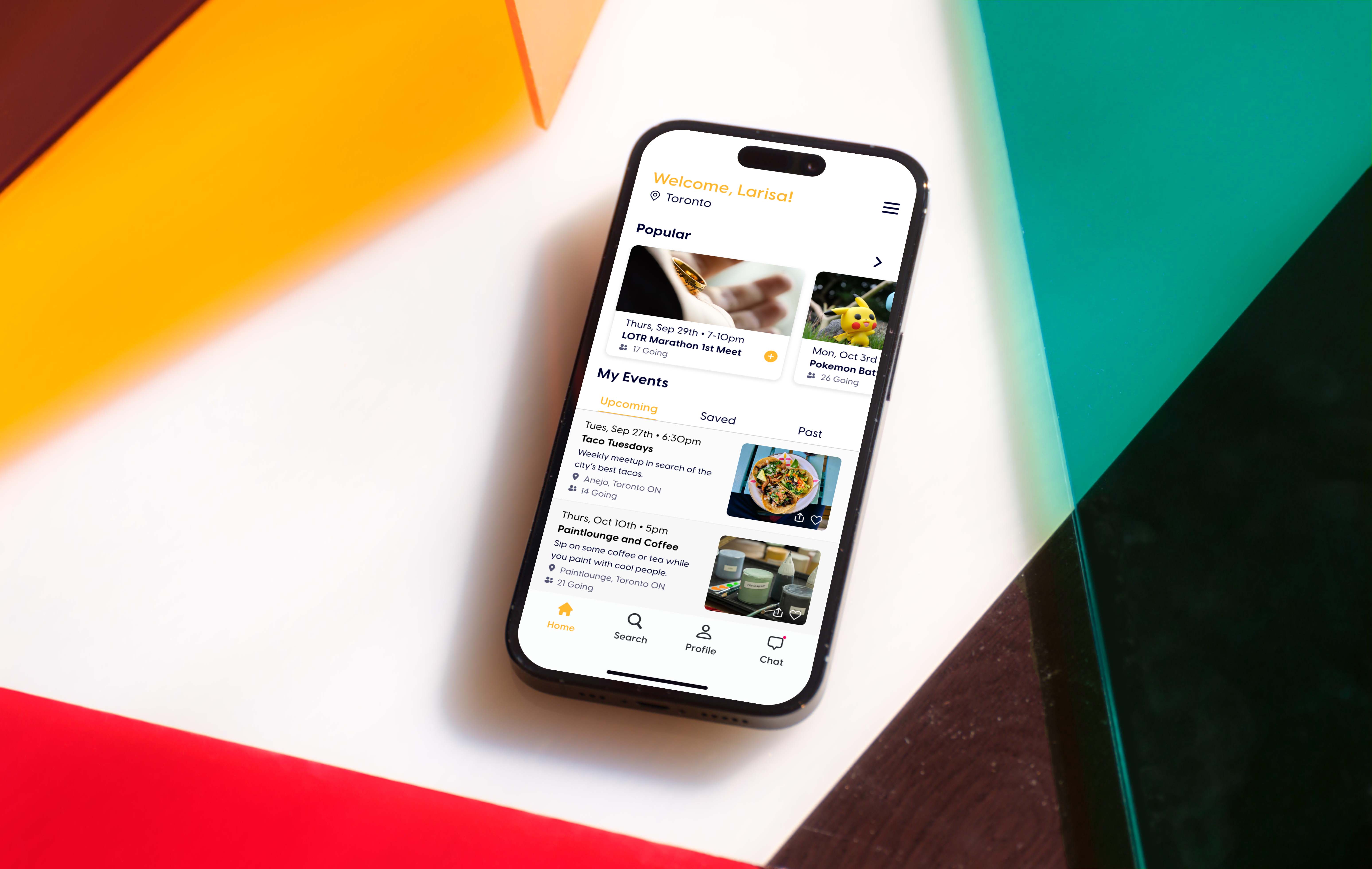
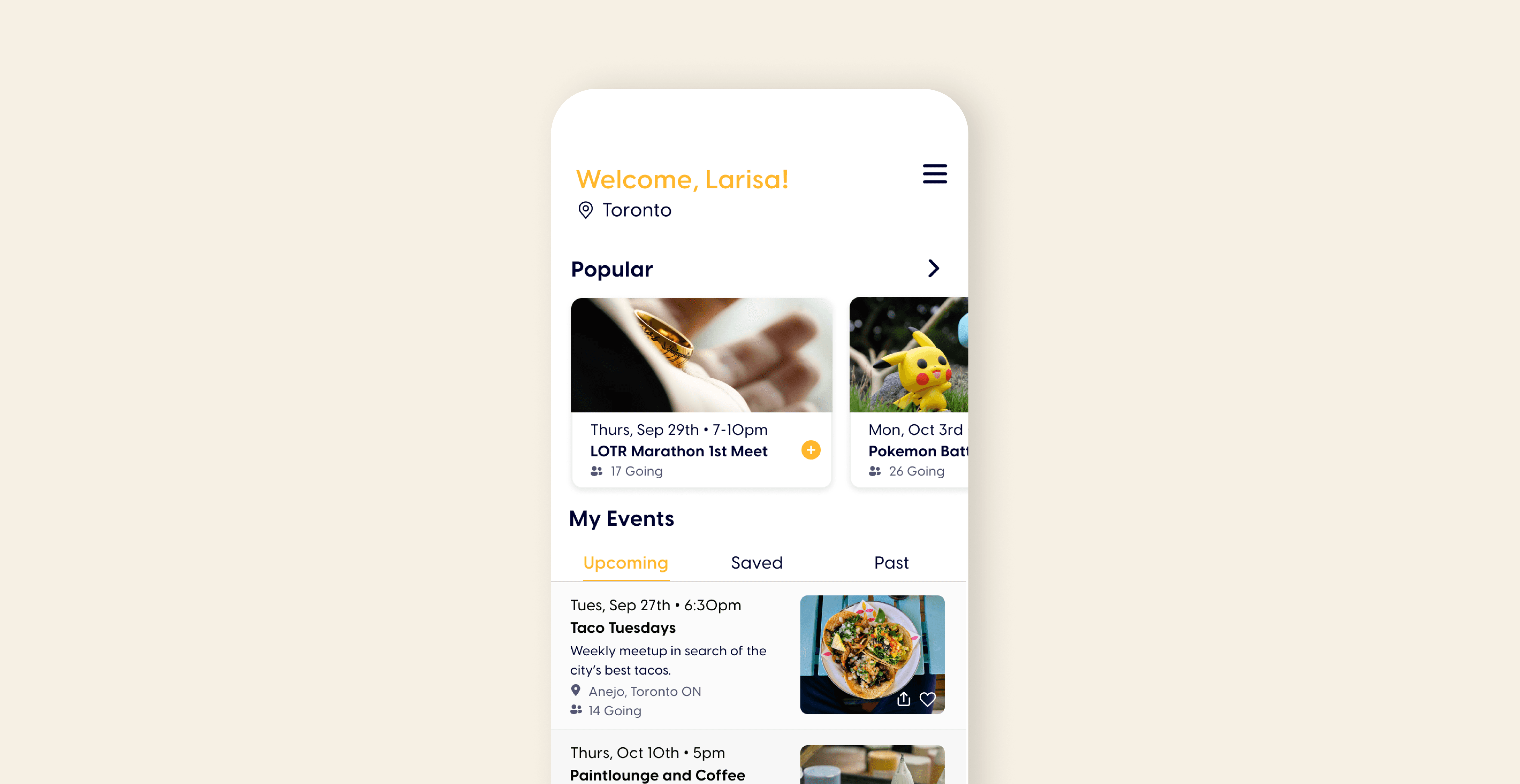
Kinect is a mobile app designed as a powerful tool to help young adults overcome loneliness. This is achieved by making it easier to sign up to local events based on user's interests. The app offers a range of features, including user profiles, groups, local events, and messaging. This case study includes all stages of the design process, from early concept to final product encompassing UX research, wireframing and prototyping, testing, and a product marketing website.
Company:
BrainStation Capstone Project
My Role:
UX/UI Designer
Year:
2022
Tools Used:
UX Research, Product Design, Mobile Design
The Loneliness Epidemic, Post Pandemic
As young adults increasingly face the serious effects of loneliness in North America (see this study…and this one), they need a social platform that helps foster genuine connections effectively. Unlike other social media platforms that encourage increased app screen time, this platform aims to help increase in-person interactions, enabling users to meet locals with similar interests. The obstacle for this case study was to develop a mobile application that is user-friendly and intuitive, and caters to diverse individual's needs while ensuring a seamless user experience. To begin, we needed to ask the following question; what makes young adults feel more connected?
Discovering the Importance of Quality Time in Young Adults
I adopted a user-centric approach, iterative design, and rigorous testing, ensuring that Kinect met the target audience (young adults in North America) needs and preferences effectively.
Parameters: After doing initial primary research to understand the problem space of loneliness and its negative effects, I set my participant criteria in preparation of user interviews to understand their goals, motivations, and pain points. Participants for surveys needed to be living in North America, be between 18 and 35 years old, and contribute to an equal ratio of male to female for the entire survey group.
Surveys: I conducted research via 15 min phone interviews, asking participant's about their social lives, perspectives on connection vs. loneliness, and preferences (see raw survey data here). After grouping data into themes, I discovered 3 valuable key insights shown below.
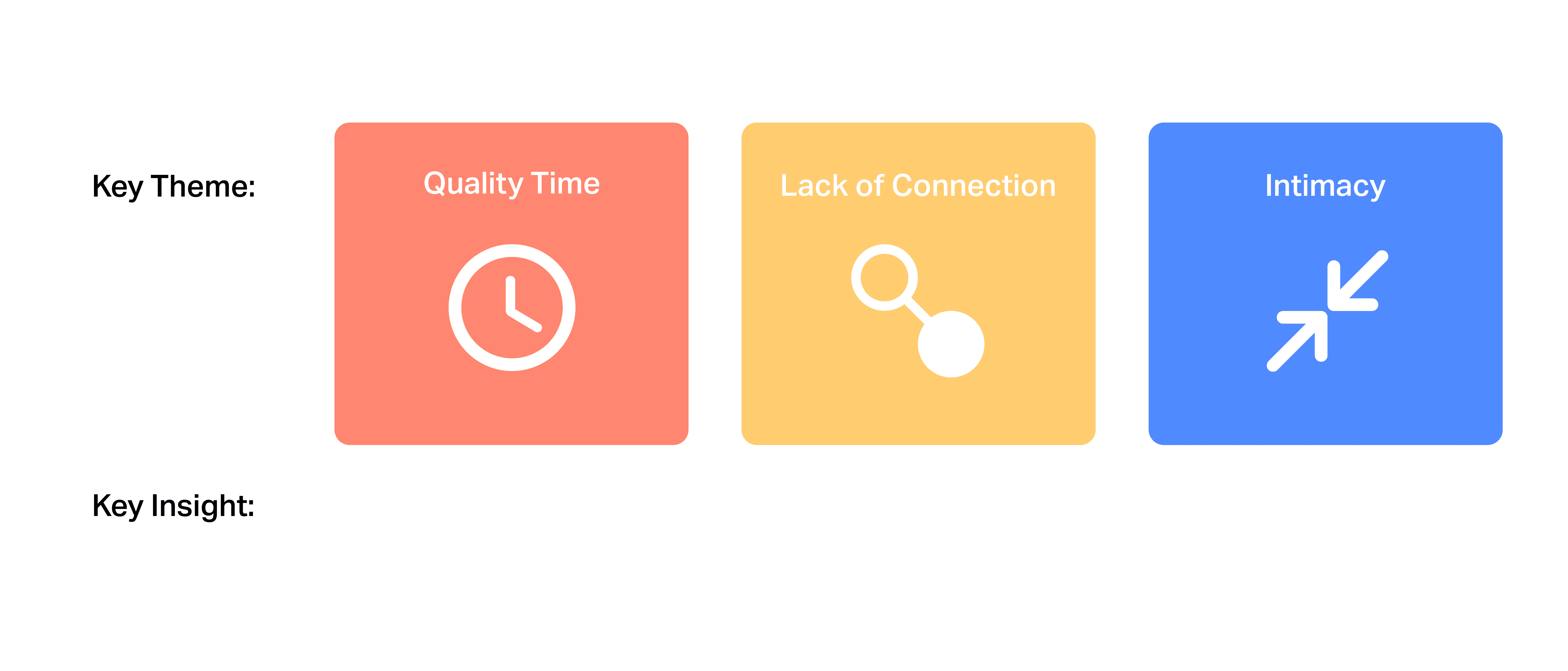
I chose to focus on the theme of Quality Time for the rest of the study, believing this posed as the best area of opportunity to making user's feel truly connected.
Persona + Task Flow: To help me visualize the experience in the social platform from the perspective of the user, I created the following persona based on the survey data. Larisa is a busy working professional in her 20's living in Toronto, who craves more genuine social connections.
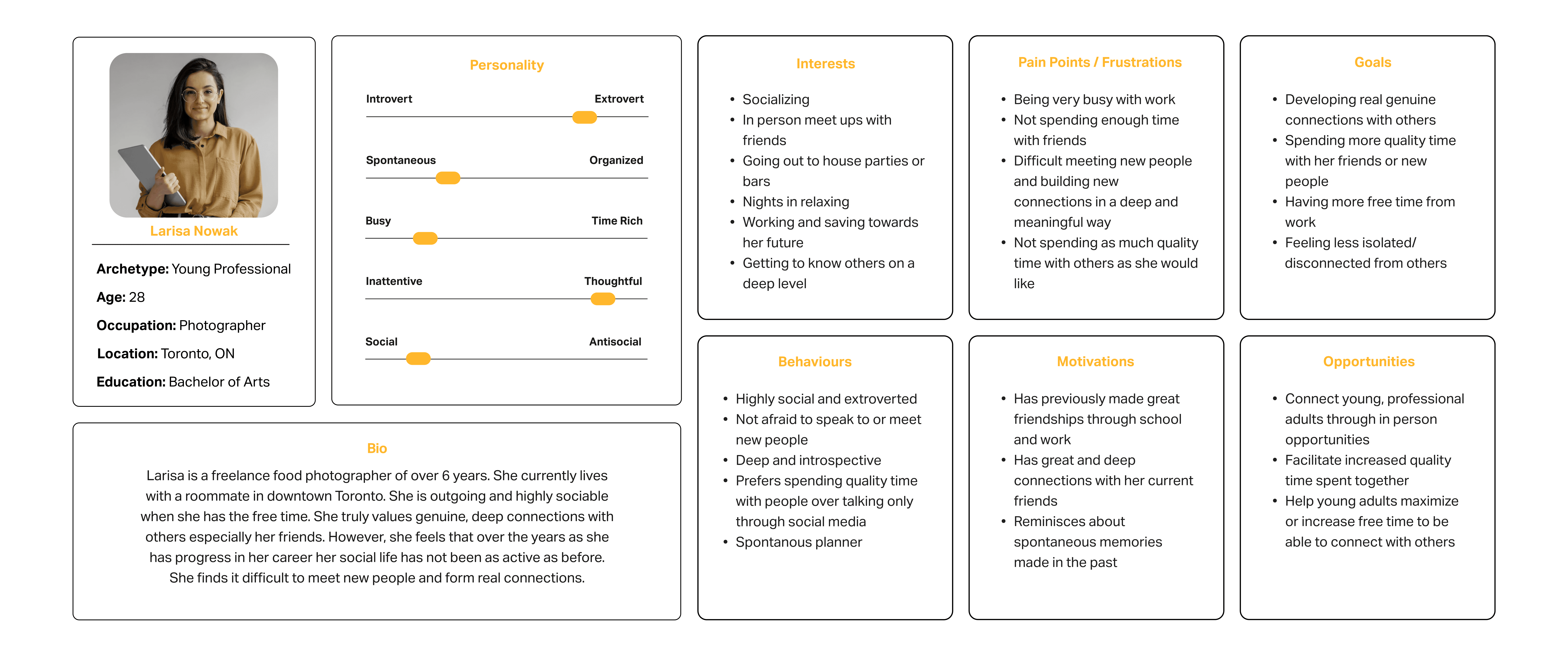
With this persona in hand, I developed user stories and grouped them into epics to determine the final task for the task flow. This helped me to visualize the experience Larisa would take in the Kinect platform, ultimately allowing her to connect with others through quality time (see the user story and task flow development process here).
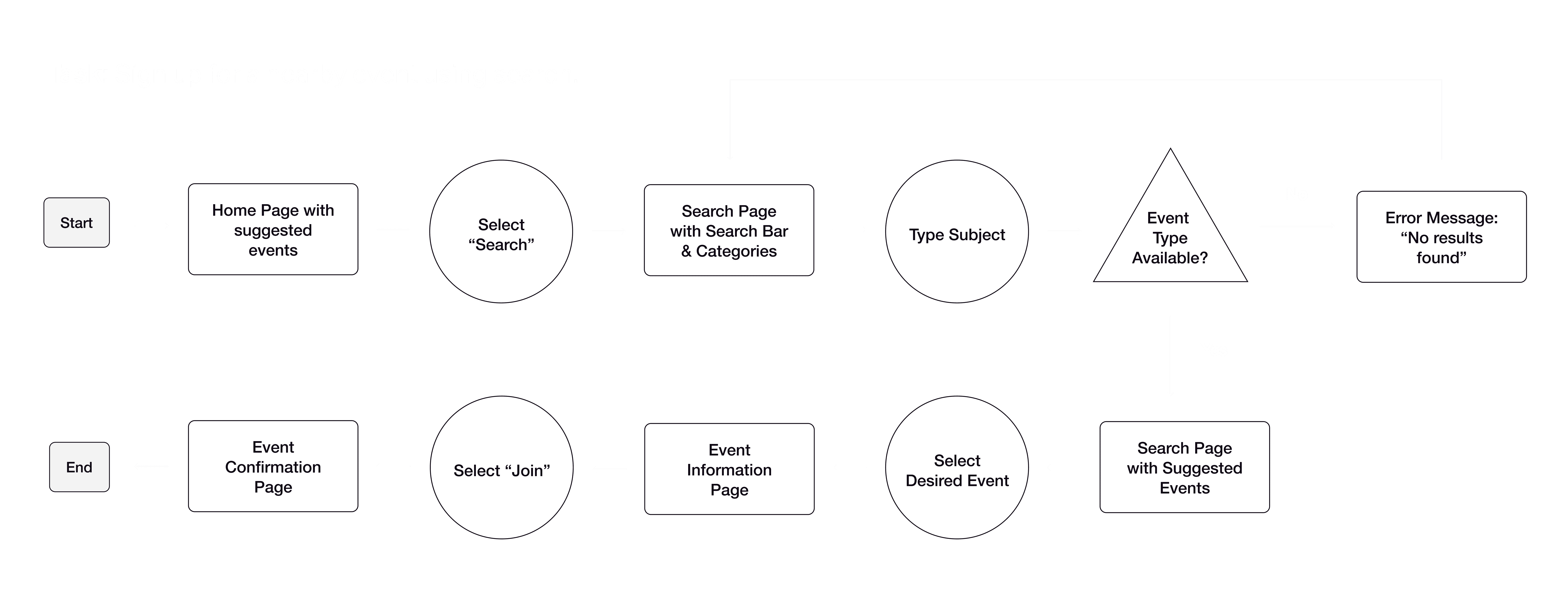
Ideation: I sketched various solutions for each screen based on the task flow above (view all sketches here). Deciding on my final sketches, I created mid-fidelity wireframes and prototypes. From start to finish, a user should be able to sign up for a nearby event based on their interest.
Testing: As soon as the first mid-fidelity wireframe and prototype were created, user testing was conducted to help inform design decisions. Throughout ideation, two rounds of user testing were conducted with 5 users, equalling to 10 user tests. The testing plan was designed according to Google Ventures framework (view testing plan here). Testing data was put into a priority matrix to determine "Big Wins", design changes that would yield the highest reward to maximize time and efficiency.
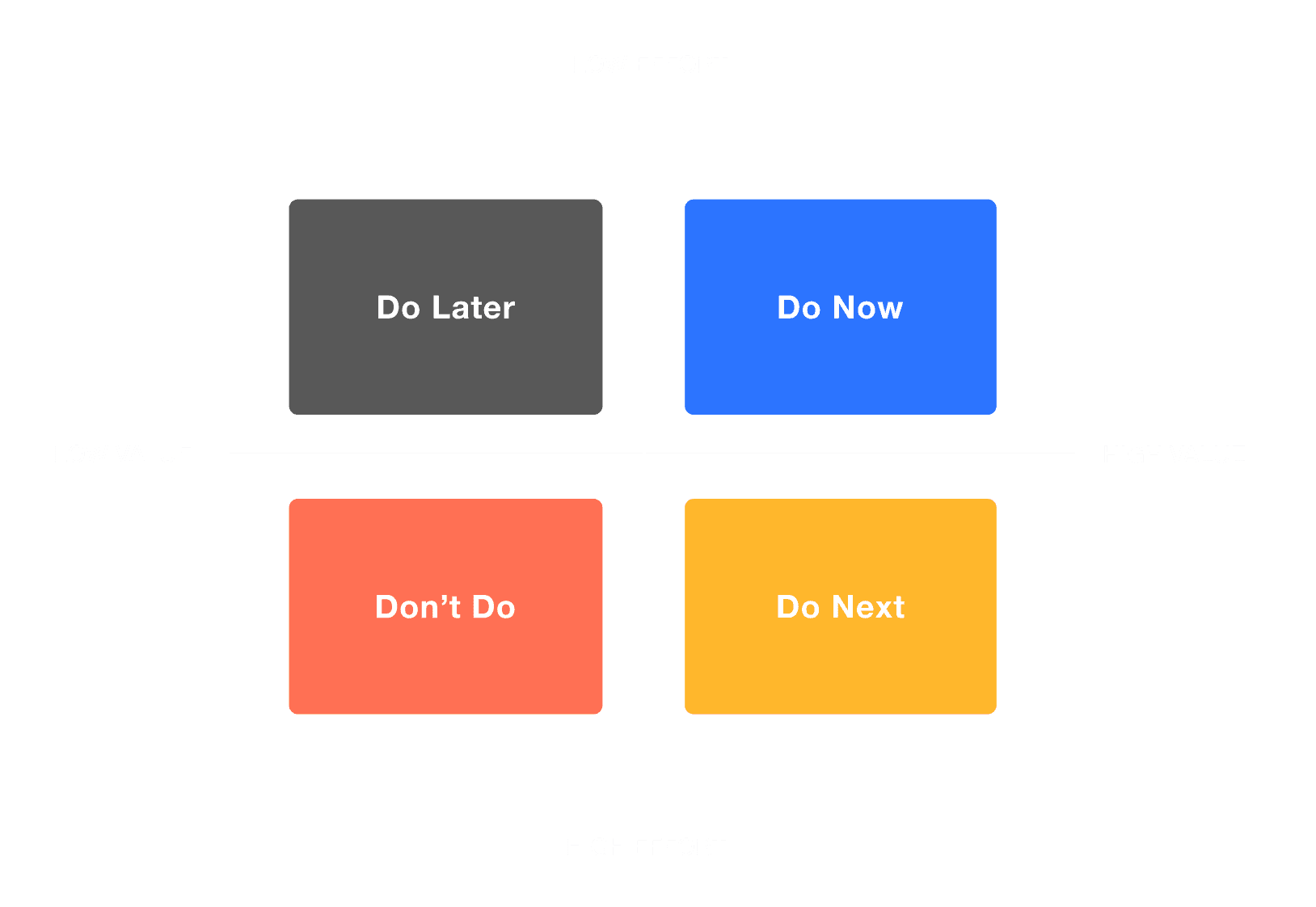
Design Iterations: User feedback was used to improve the prototype, resulting in a better user experience and hypothetically, increased user engagement. By implementing the "Do Now" design changes based on user feedback, task completion of signing up for an event increased from 60% to 100%!
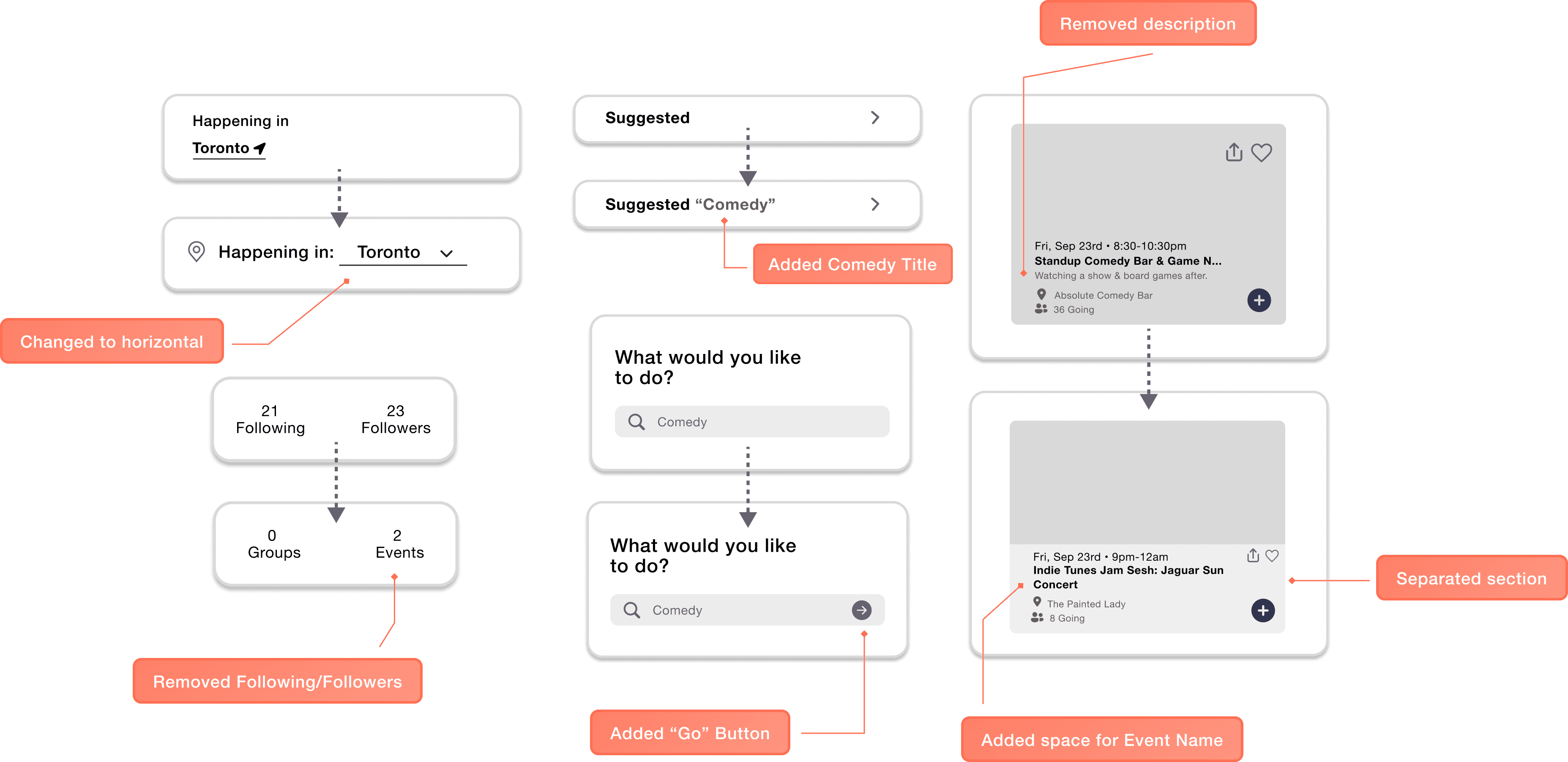
From "Stuck in Search" to "Sign Me Up!"
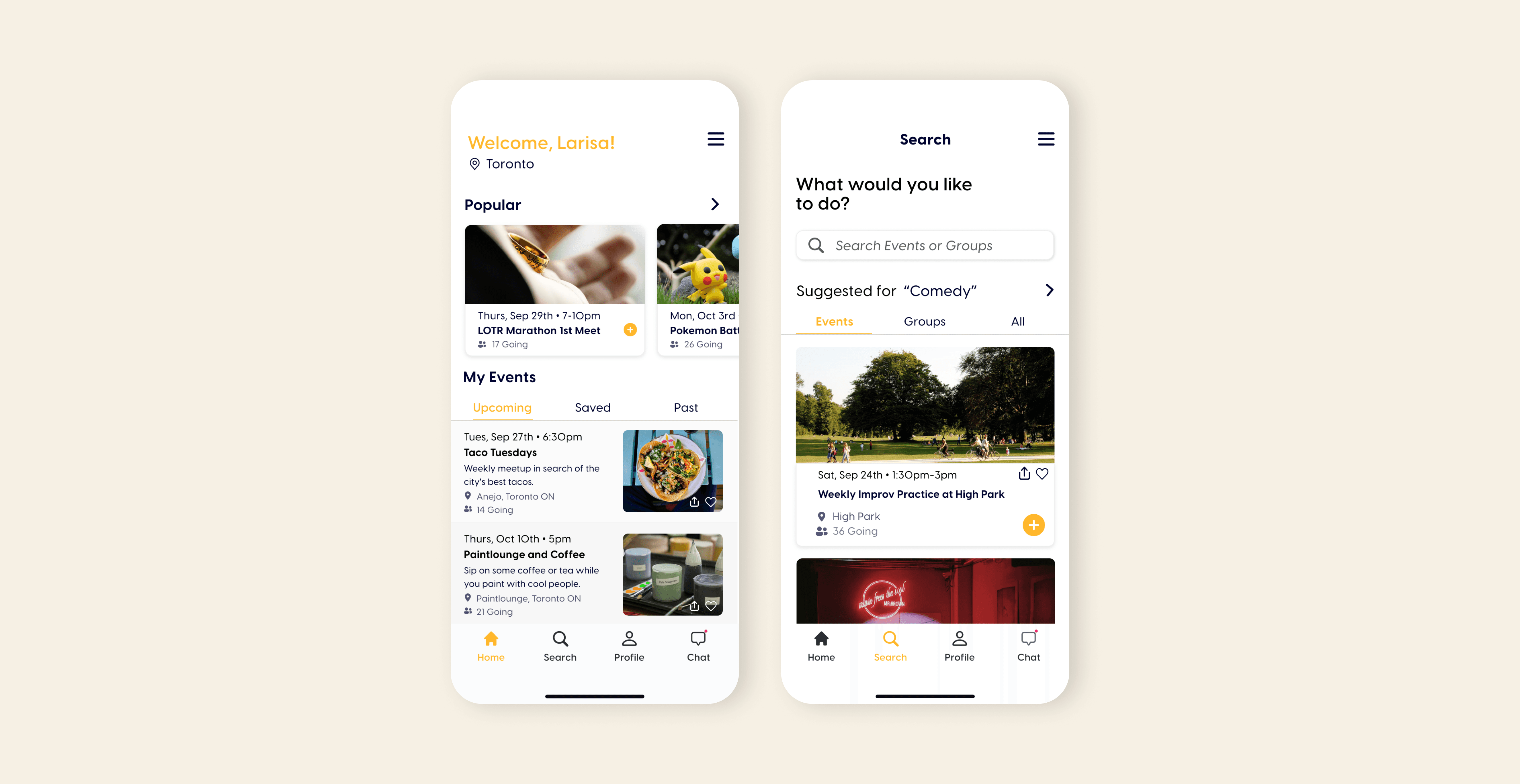
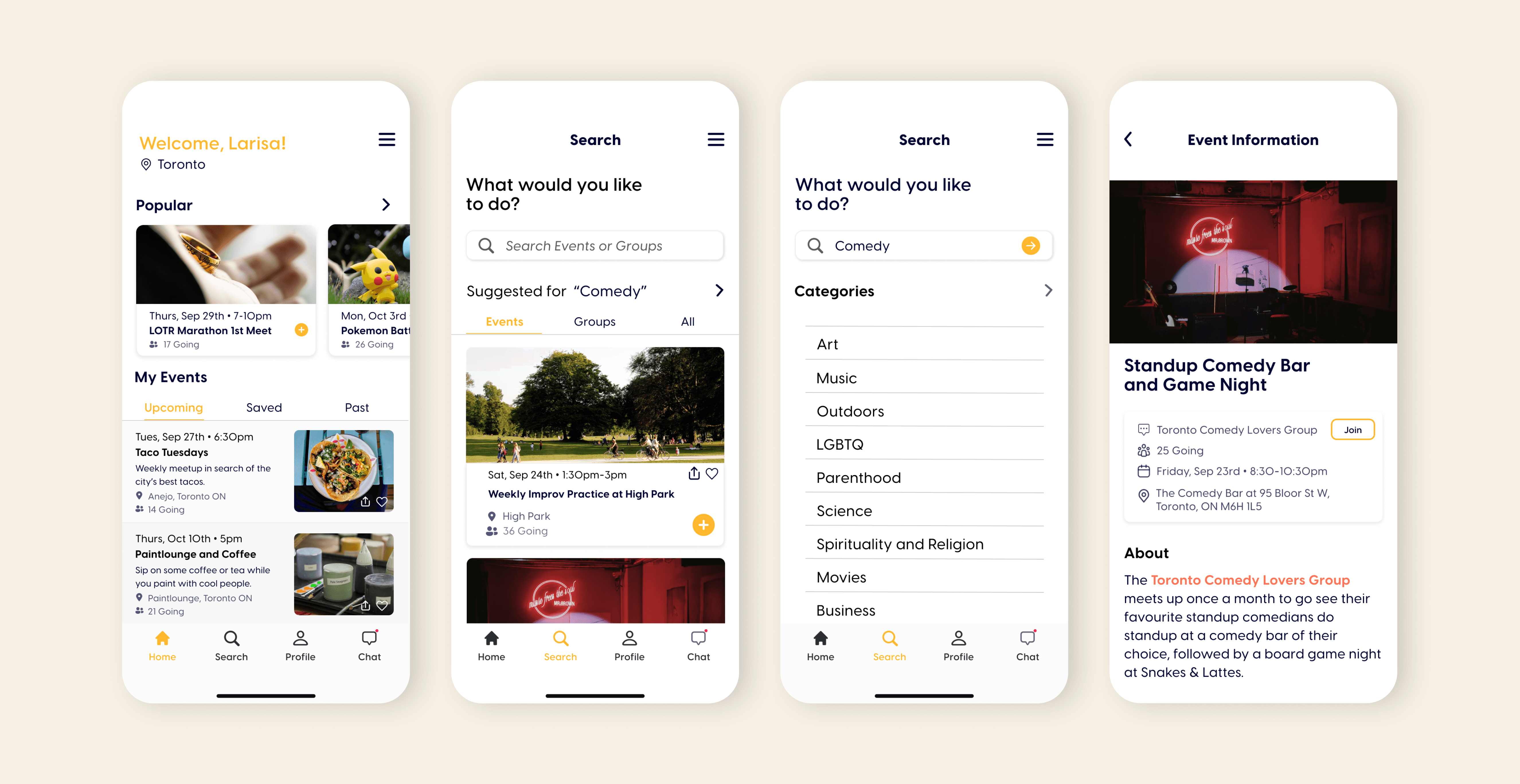
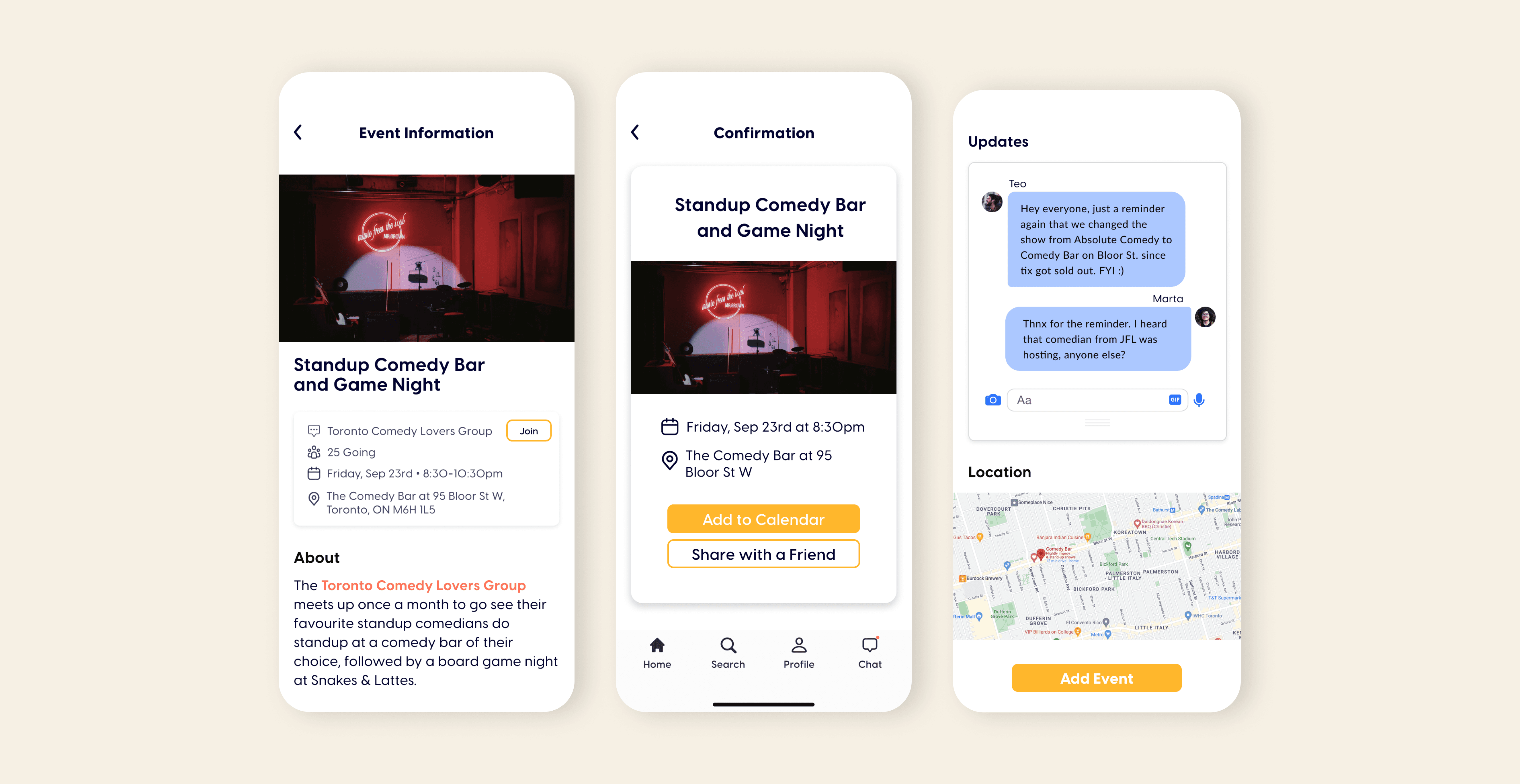
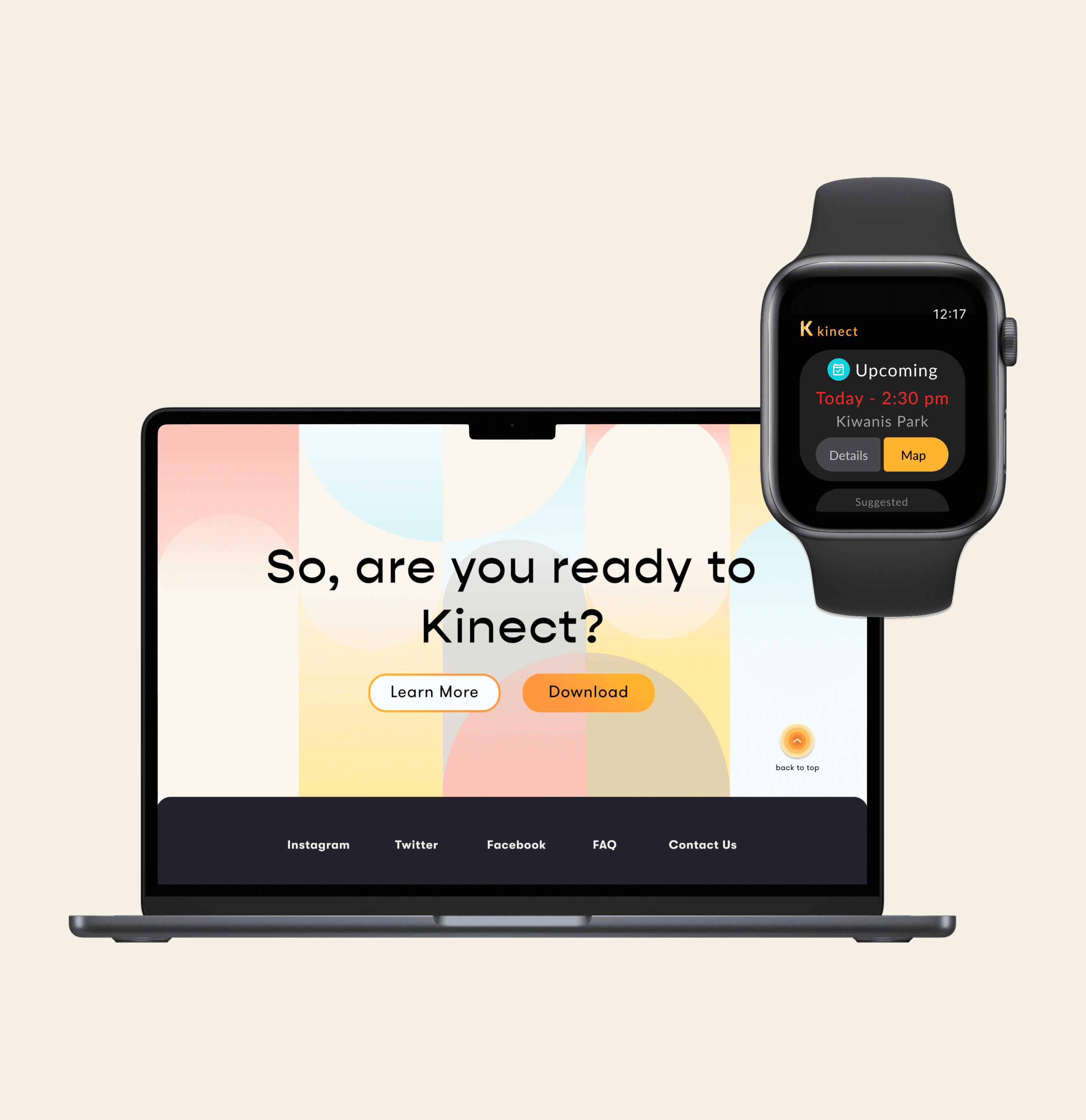
Thanks to design iterations that raised task completion by 40%, Kinect's users can easily sign up for local events based on their interests, thereby meeting others and spending quality time that builds genuine friendships. The app's user-friendly interface and intuitive design make it easy for users to view and sign up for events, track upcoming events, create a profile, and send messages directly to users or within groups. Users can also download Kinect to their Apple Watch, helping them to keep track of their signed up events when they are on the go.
Conclusion
Kinect's success was due in part to its user-centric design process. By conducting extensive research and user testing this helped to ensure that the app met users' needs and preferences, resulting in a highly effective and user-friendly platform that allows user's to build genuine connections via signing up for nearby events.
Despite challenges in the initial wireframe and prototype where users were stuck after trying to search for an event, design changes based on extensive user feedback provided the necessary insight as to what needed to be improved. By implementing the high yielding changes, task completion rose from 60% to 100%. It is clear that feedback and testing is crucial to developing a working digital product that delights users.
The app's range of features, including event viewing and sign up, groups, messaging, and profiles, provides users with a comprehensive loneliness combatting solution. This helps users to reduce feelings of loneliness and ultimately lead better lives.